
Key takeaways
- Who pays for fence repair between neighbors depends on local laws, where the fence sits, and who caused the damage.
- Don’t fix the fence alone or send your neighbor a bill unless you both agreed in writing first.
- If they won’t split the cost, try mediation or small claims court, but take photos and keep receipts.
When the fence between you and your neighbor starts leaning or falling apart, it gets messy fast.
Costs can pile up. Conversations can turn tense. Some neighbors ignore it. Others push to split everything.
This guide lays out seven rules to help sort it out. It keeps things simple and helps avoid paying more than you should.
Read on to know what to do, how to do it, and when to bring your neighbor in.
7 rules to help you know who is responsible for fence repair between neighbors
Rule #1: Check your local laws first

There’s no single rule across the U.S. when it comes to fences… not even within each state.
Local cities and counties often have their own guidelines, especially for shared fences.
Some areas follow a “shared responsibility” rule if the fence sits on the property line, while others leave it up to neighbors to work it out on their own.
It’s easy to check if you know where to look. Search for your local fence regulations online. Visit your local government and inquire about the building, zoning, or planning sections.
Still not sure? Just give them a call.
If you’d rather talk to someone who deals with these all the time, reach out to a local fence company.
It might feel like an extra step, but it can save you a headache. If you assume your neighbor will split the cost, and they’re not legally required to, you could end up paying the whole thing.
And keep in mind, laws change. What applied a few years ago might not apply now.
Also, skip the neighborhood gossip. Unless your neighbor works at a city hall, get your info straight from the source.
Rule #2: Find out exactly where the fence actually sits

You can’t talk about who pays until you know where the fence actually is.
Is it right on the property line or a few feet inside your yard? Or was it put in crooked years ago and no one noticed?
There are a few ways to check. Look for the property survey from when you bought the house. Contact your local land records office for access to parcel maps.
If it’s still unclear, hire a licensed surveyor. It’s not cheap, but it’s cheaper than a legal dispute
This matters because who owns the fence usually depends on where it stands, it might be right on the line (likely a shared cost), on your side (likely your cost) or on their side (likely their cost).
Even a few inches can change who’s responsible.
Sort this out before you bring up money. It clears up a lot of the “that’s not my fence” talk before it starts.
Rule #3: Talk to your neighbor before doing anything
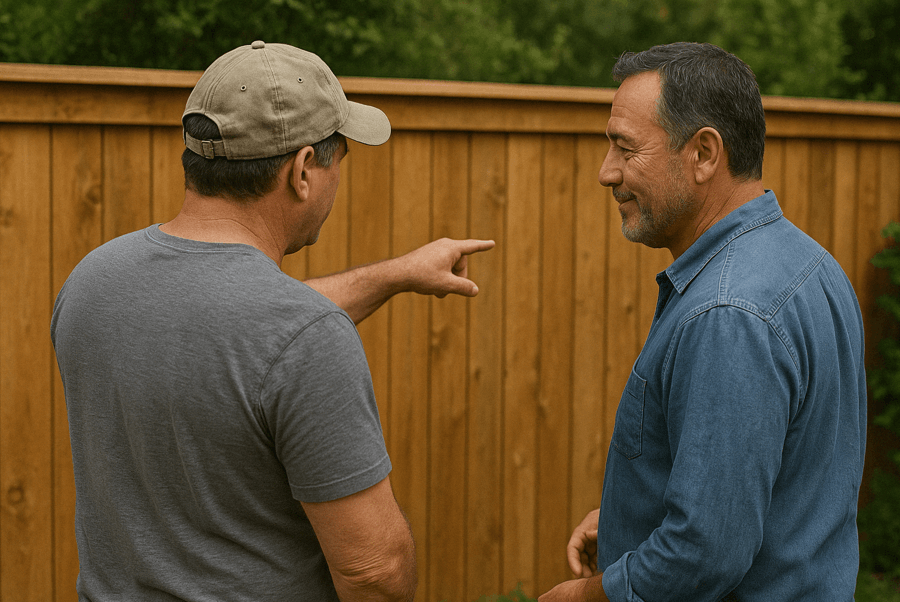
Even if the fence looks ready to fall over, don’t just go ahead and fix it and then send them half the bill.
Start with a quick, low-key conversation.
Keep it friendly. You could say something like, “Noticed the fence looks like it’s falling apart. Have you seen it too?”
Then, stop and let them respond.
This matters because doing anything without an agreement usually backfires.
They might say they never approved it, they think you overpaid, or eventually say that they actually liked the old fence better.
Even if you’ve always gotten along, it’s still worth having the talk. Most fence disputes start when someone skips this step.
And no… silence doesn’t mean they’re fine with it.
Rule #4: Put the agreement in writing before anything starts

Even if you trust your neighbor, write it down. It doesn’t need to be formal. Just clear and simple like, what the job is (e.g replacing the back fence), the total cost, how you’re splitting the bill, when each person will pay, or when the work is starting.
Here’s an example: “We both agree to replace the back fence at a total cost of $1,200. Each person pays $600 before work begins on August 5.”
Both names and signatures should be included in the agreement.
You need to write it down because people forget and move. And sometimes, people change their minds.
If that happens, your short written agreement becomes proof.
A signed note holds up. A handshake doesn’t.
It also avoids future confusion when someone says, “Wait… I thought you were covering the whole thing.”
Rule #5: Don’t fix it on your own and ask for money later
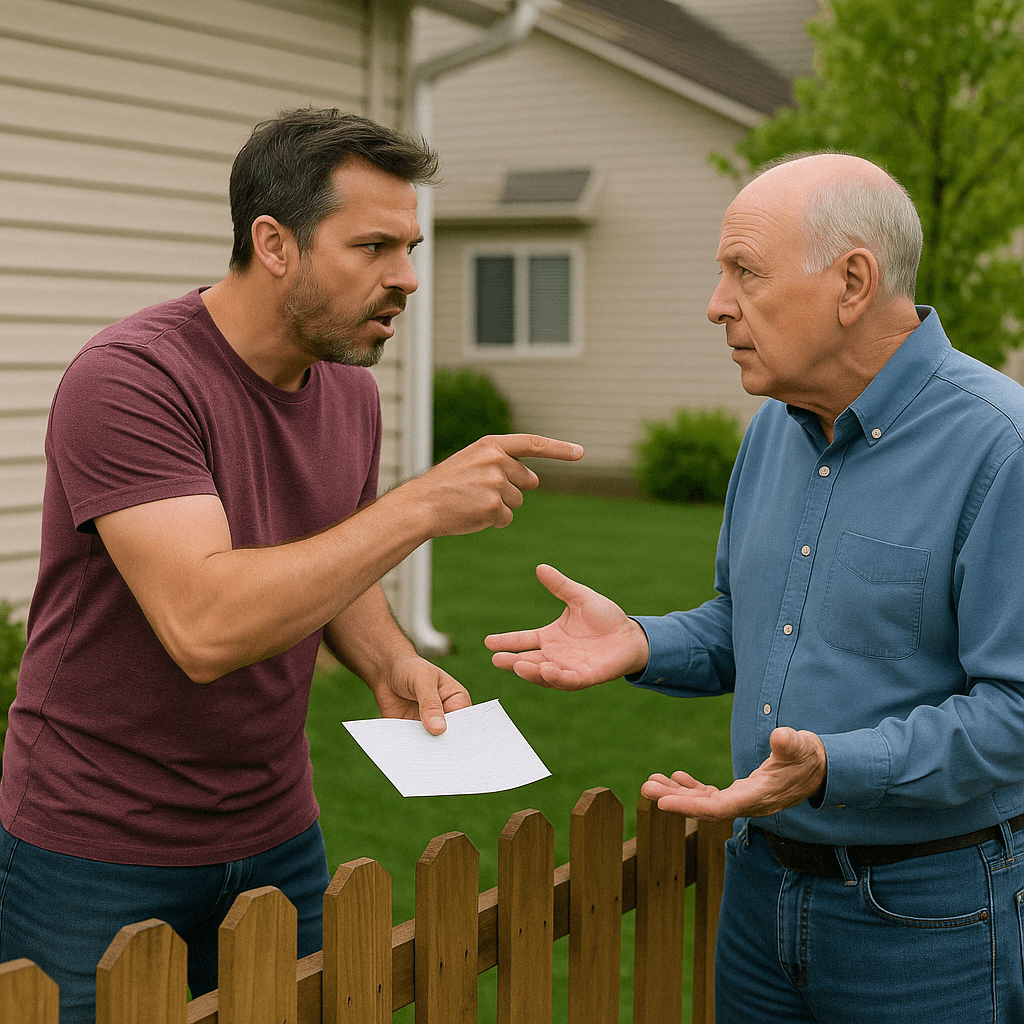
This is where people often get burned. You see the damage, contact a fence contractor, get the fence fixed, and then ask your neighbor to split the cost.
Then, they say no. Now you’re frustrated…. And legally, they’re allowed to refuse.
If there wasn’t an agreement before the work started, they’re not responsible for the bill, no matter how bad the fence looked.
There are only two situations where they might still be responsible.
First, if you already had a written agreement. Second, the repair was urgent and dangerous.
There are some cases where you can act first if it’s a real emergency. A fence panel flying into the street probably counts. But a loose post that’s been leaning for a year? Not so much.
If something’s truly dangerous, like parts falling onto the sidewalk or into traffic, you might be within your rights to jump in and fix it fast.
Just make sure to cover yourself. Take photos and save the receipts. Let your neighbor know what happened and why you didn’t wait.
Even then, tread carefully. Don’t try to pass off a mild inconvenience as an emergency.
A court won’t accept “I was sick of looking at it” as a good reason to skip the process.
Rule #6: What to do if your neighbor refuses to cooperate
They won’t talk about it. They ignore your messages. Or they just say no.
It’s frustrating, but don’t blow up.
Start with a short, neutral letter that contains a quick description of the issue, a few photos of the damage, one or two quotes from contractors and what you’re suggesting as a solution.
Make sure you keep it calm and clear.
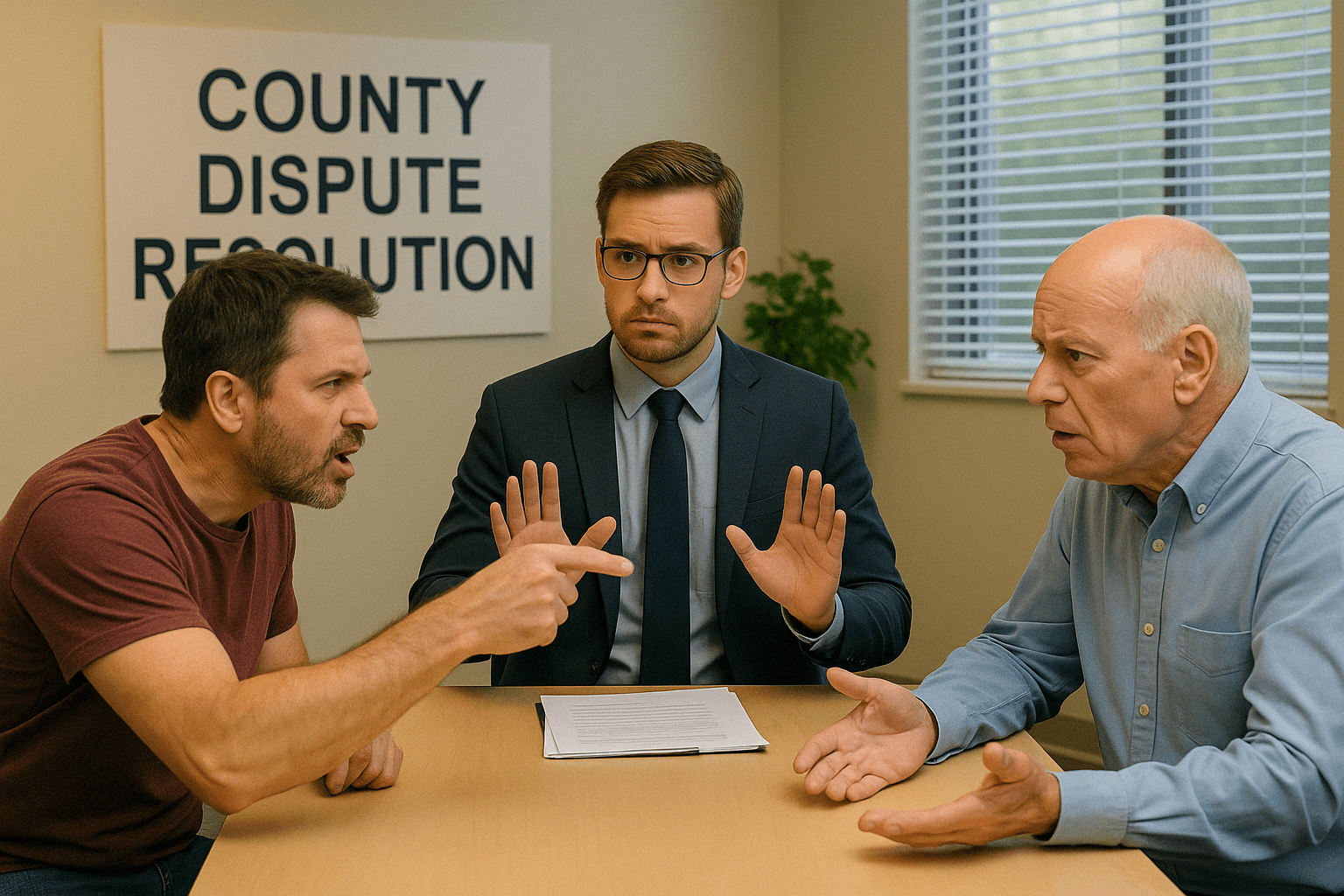
If that doesn’t move things forward, check if your city or county offers free dispute resolution. A lot of them do. Mediation services exist to help avoid dragging things into court.
If you’re still getting nowhere, small claims court can be your last stop. But you’ll need proof that you tried everything else first.
They will require you to submit copies of your written messages, contractor quotes, the final invoice (if the work’s already done), and photos of the damage.
Most states let you claim somewhere between $3,000 and $10,000, depending on the situation.
Just be careful. If you skipped the earlier steps, your case might not hold up.
Also, try to avoid common mistakes that may escalate fence disputes. These usually includes threatening legal action right away which shuts people down.
Posting about them online makes you look petty. Touching their side of the fence can also hurt your case.
Stay polite. Keep everything documented. That’s how you protect yourself if it comes to a legal fight.
Rule #7: Remember that not all damage is treated the same way

Before you assume the cost should be split 50/50, take a minute to figure out what actually caused the damage.
Some things like storm damage, general wear and tear, or termite issues are usually considered shared responsibility. That’s because they’re outside anyone’s control.
But if the damage clearly came from one side, the person on that side will likely have to cover more.
For example, if tree roots from your yard pushed the fence, or you accidentally backed into it, or a firepit on your side melted a few panels. Those costs usually land on you.
If it’s not clear who’s at fault, a local fence company can take a look and include their opinion with the quote. That way, you’re not guessing.
One more thing… check your insurance.
Sometimes home insurance will cover accidental fence damage, and your neighbor’s policy might too. It just depends on what’s in the fine print.
Give your insurer a quick call and just ask. It takes five minutes and it could save you a few hundred bucks.
When no one takes the lead, and why permits matter
If no one’s stepping up to get things moving, don’t let the fence just sit there while the tension builds.
When both sides stall, the damage drags on, and so does the awkwardness.
You’ve got a few ways to break the deadlock without turning it into a fight.
Try getting two quotes together so it feels more balanced. You can also suggest a trade-off, like maybe you take care of this one, and they handle the next project.
You could also bring up a weighted split, especially if they’ve lived there longer or have more of the fence facing their side.
Some people even go by length, whoever has more of the fence showing on their side pitches in a bit more.
None of these are perfect, but if it gets the job done and keeps things civil, it’s worth a shot.
Also, don’t forget about permits. Even for basic repairs, a lot of cities require them, especially if you’re changing the height or using different materials.
So, be sure to complete your fence permit checklist submittals.
Before starting anything, ask your city or your builder.
Skipping this step can cost you. You might get fined, or worse, be told to tear the whole thing down and start over.
Nothing’s more frustrating than paying twice for the same fence.
Fixing a fence starts with the right steps
Talk things through, and don’t rush into repairs if it’s a shared fence.
Check where the fence sits, figure out what caused the damage, and agree on the cost before anything happens. Put it in writing, even if it feels formal
Hire a contractor to save time and money. A good fence contractor can tell you whether it needs a patch or a full replacement, especially if you have vinyl fences. Some even help with permits, which can save you another round of headaches.
Start with the facts, talk early, and call the right people when it’s time to get the work done. That’s how you fix the fence and keep the peace.